The treadmill, a staple in modern fitness routines, has a surprisingly rich history that dates back centuries. Originally, treadmills were not designed for exercise but rather for labor. In ancient times, they were used as a means to harness energy, often powered by animals or humans.
These early versions were employed in various industries, such as milling grain or pumping water. The concept of walking or running in place to generate power was both innovative and practical, showcasing human ingenuity long before the advent of modern fitness culture. As time progressed, the treadmill evolved from a tool of labor to a device for personal fitness.
In the 19th century, the first mechanical treadmills were developed for medical purposes, allowing doctors to assess patients’ cardiovascular health. By the mid-20th century, the treadmill began to gain popularity as a fitness machine in homes and gyms. With advancements in technology, treadmills became more sophisticated, incorporating features like adjustable speeds and inclines.
Today, they are a cornerstone of cardiovascular training, offering a convenient way for you to stay active regardless of weather conditions or time constraints.
When it comes to choosing a treadmill, understanding the differences between manual and motorized options is crucial. Manual treadmills operate without electricity; they rely on your movement to power the belt. This type of treadmill can be beneficial for those seeking a more challenging workout, as you must generate all the momentum yourself.
They are often more compact and less expensive than their motorized counterparts, making them an attractive option for budget-conscious individuals or those with limited space. On the other hand, motorized treadmills are equipped with an electric motor that drives the belt, allowing for a smoother and more controlled workout experience. These treadmills typically come with various features such as programmable workouts, heart rate monitors, and incline settings.
If you prefer a more versatile workout that can be tailored to your fitness level, a motorized treadmill may be the better choice for you. Additionally, many motorized models offer cushioning systems that reduce impact on your joints, making them ideal for longer sessions or for those recovering from injuries.
Key Takeaways
- Treadmills have a long history, dating back to the 1800s when they were used as punishment devices and later as exercise machines.
- Motorized treadmills offer more features and convenience, while manual treadmills are more affordable and require more effort from the user.
- Using a treadmill can improve cardiovascular health, aid in weight loss, and provide a convenient way to exercise indoors.
- When choosing a treadmill, consider factors such as motor power, belt size, cushioning, and additional features like incline and workout programs.
- Treadmill workouts can be enhanced with interval training, varying speeds and inclines, and incorporating strength training exercises.
Benefits of Using a Treadmill
Using a treadmill offers numerous benefits that can enhance your overall fitness journey. One of the most significant advantages is convenience. With a treadmill at home or access to one at the gym, you can exercise regardless of external conditions like rain or snow.
This accessibility can help you maintain a consistent workout routine, which is essential for achieving your fitness goals. Moreover, treadmills allow you to control your workout environment, including speed and incline, enabling you to tailor your sessions to your specific needs. Another key benefit is the ability to track your progress easily.
Most modern treadmills come equipped with digital displays that provide real-time feedback on your speed, distance, calories burned, and heart rate. This data can be invaluable in helping you set and achieve personal fitness milestones. Additionally, many treadmills offer pre-set workout programs designed to challenge you and keep your routine fresh and engaging.
Whether you’re aiming for weight loss, improved endurance, or overall health, using a treadmill can be an effective way to reach your objectives.
How to Choose the Right Treadmill for You
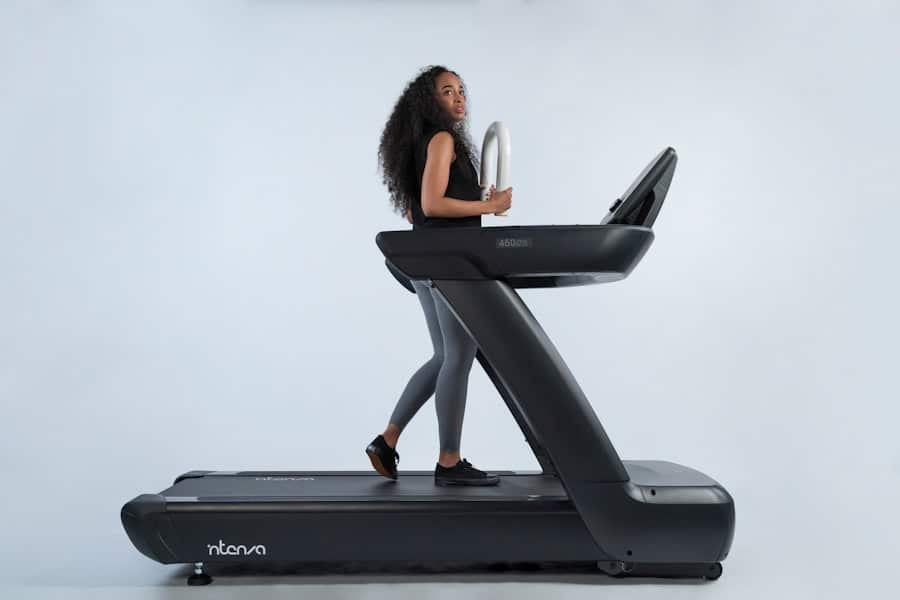
Selecting the right treadmill involves considering several factors that align with your fitness goals and lifestyle. First and foremost, think about how you plan to use the treadmill. Are you looking for a machine primarily for walking, or do you intend to run?
Your intended use will influence the type of treadmill you should consider. For instance, if you’re an avid runner, you’ll want a model with a sturdy frame and a powerful motor to support higher speeds. Budget is another critical factor in your decision-making process.
Treadmills can range from affordable manual models to high-end motorized machines with advanced features. Determine how much you’re willing to invest in your fitness equipment and explore options within that range. Additionally, consider the space available in your home or gym.
Some treadmills are foldable and designed for compact storage, which can be beneficial if you’re short on space.
Treadmill Workouts: Tips and Techniques
To maximize your treadmill workouts, incorporating variety and structure is essential. One effective technique is interval training, where you alternate between high-intensity bursts of speed and lower-intensity recovery periods. This method not only keeps your workouts engaging but also boosts calorie burn and improves cardiovascular fitness.
For example, you might sprint for 30 seconds followed by one minute of walking or jogging before repeating the cycle. Another tip is to experiment with incline settings. Walking or running on an incline simulates outdoor terrain and engages different muscle groups compared to exercising on a flat surface.
Gradually increasing the incline during your workout can enhance strength and endurance while also providing a more challenging experience. Remember to listen to your body; if you’re feeling fatigued or uncomfortable, it’s perfectly acceptable to adjust your pace or incline accordingly.
Safety Precautions When Using a Treadmill
Safety should always be a priority when using a treadmill. Before starting your workout, ensure that you are familiar with the machine’s controls and features. Take time to read the user manual if you’re using a new model; understanding how to operate it safely can prevent accidents.
Additionally, always wear appropriate footwear designed for running or walking to provide adequate support and traction. While exercising on a treadmill, maintain proper posture by keeping your head up and shoulders relaxed. Avoid leaning too far forward or gripping the handrails tightly; this can lead to poor form and increase the risk of injury.
It’s also wise to start at a slower pace to warm up before gradually increasing your speed or incline. Finally, never attempt to multitask while on the treadmill; distractions can lead to accidents or falls.
Maintaining and Caring for Your Treadmill
Proper maintenance is essential for ensuring the longevity and performance of your treadmill. Regularly check the machine for any signs of wear or damage, such as frayed belts or loose screws. Keeping the treadmill clean is equally important; dust and debris can accumulate in the motor and belt area, potentially causing malfunctions over time.
Wipe down the surface after each use and vacuum around the machine regularly. Lubrication is another critical aspect of treadmill care. Most manufacturers recommend lubricating the belt every few months to reduce friction and wear on the motor.
Consult your user manual for specific instructions on how often this should be done and what type of lubricant is suitable for your model. By taking these simple steps, you can ensure that your treadmill remains in excellent working condition for years to come.
Treadmill Accessories and Add-ons
Enhancing your treadmill experience can be achieved through various accessories and add-ons designed to improve comfort and functionality. One popular accessory is a treadmill mat, which helps protect your flooring from scratches and absorbs noise during workouts. This can be particularly beneficial if you live in an apartment or have neighbors nearby who might be disturbed by the sound of your exercise routine.
Another useful addition is a tablet holder or phone mount that allows you to watch videos or listen to music while you work out. Staying entertained can make your sessions feel shorter and more enjoyable. Additionally, consider investing in a heart rate monitor or fitness tracker that syncs with your treadmill’s display; this can provide valuable insights into your performance and help you stay motivated.
When deciding between using a treadmill or running outdoors, it’s essential to weigh the pros and cons of each option based on your preferences and circumstances. One significant advantage of outdoor running is the variety of scenery and fresh air it offers; many people find this invigorating and motivating. Additionally, running outside allows you to engage with nature and enjoy changing landscapes, which can enhance your overall experience.
Conversely, treadmills provide a controlled environment that eliminates many variables associated with outdoor running, such as weather conditions or uneven terrain. This predictability can be particularly beneficial for beginners who may feel intimidated by outdoor running or those training for specific events who want to simulate race conditions accurately. Ultimately, both options have their merits; it may be worth incorporating both into your routine depending on your mood or goals.
Treadmill HIIT Workouts for Maximum Results
High-Intensity Interval Training (HIIT) on a treadmill can yield impressive results in terms of fat loss and cardiovascular fitness in a shorter amount of time compared to traditional steady-state cardio workouts. A typical HIIT session might involve alternating between short bursts of maximum effort—such as sprinting at full speed—and recovery periods where you slow down to a walk or light jog. To get started with HIIT on a treadmill, choose intervals that suit your fitness level; beginners might start with 20 seconds of sprinting followed by 40 seconds of walking, while more advanced users could aim for 30 seconds of sprinting followed by 30 seconds of recovery.
Aim for 20-30 minutes total workout time, including warm-up and cool-down periods. This approach not only keeps workouts exciting but also challenges your body in new ways.
Treadmill Desk: Combining Work and Exercise
In today’s fast-paced world where many people struggle to find time for exercise amidst their busy schedules, the concept of a treadmill desk has gained popularity as an innovative solution. A treadmill desk allows you to walk at a slow pace while working on tasks such as typing emails or attending virtual meetings. This combination promotes physical activity throughout the day without sacrificing productivity.
Using a treadmill desk can have numerous benefits beyond just increased physical activity; it may also improve focus and creativity while reducing stress levels associated with sedentary work environments. However, it’s essential to start slowly when transitioning to this new setup; begin with short sessions of walking while working before gradually increasing duration as you become more comfortable with multitasking in this manner. By integrating movement into your workday, you can enhance both your physical health and overall well-being.
If you’re looking to enhance your home gym setup, you may also be interested in the Tiastar Mini Fridge Review. Having a mini fridge in your workout space can help you stay hydrated and fueled during your treadmill sessions. It’s a convenient way to keep your drinks and snacks nearby without having to leave the room. Plus, the compact size of the Tiastar Mini Fridge makes it easy to fit into any corner of your home gym.
FAQs
What is a treadmill?
A treadmill is a piece of exercise equipment that allows users to walk, run, or jog in place. It consists of a moving belt that the user walks or runs on, and is powered by a motor.
What are the benefits of using a treadmill?
Using a treadmill can help improve cardiovascular health, burn calories, and improve overall fitness. It also provides a convenient and weather-proof option for walking or running.
What are the different types of treadmills?
There are manual treadmills, which are powered by the user’s movement, and motorized treadmills, which are powered by an electric motor. There are also different types of motorized treadmills, such as folding treadmills, commercial treadmills, and incline treadmills.
What features should I look for in a treadmill?
When choosing a treadmill, consider the motor power, belt size, cushioning, incline options, built-in workout programs, and additional features such as heart rate monitors, entertainment options, and connectivity.
How do I maintain a treadmill?
To maintain a treadmill, regularly clean the belt and deck, lubricate the belt, check and tighten the bolts, and keep the machine in a well-ventilated area. It’s also important to follow the manufacturer’s maintenance guidelines.